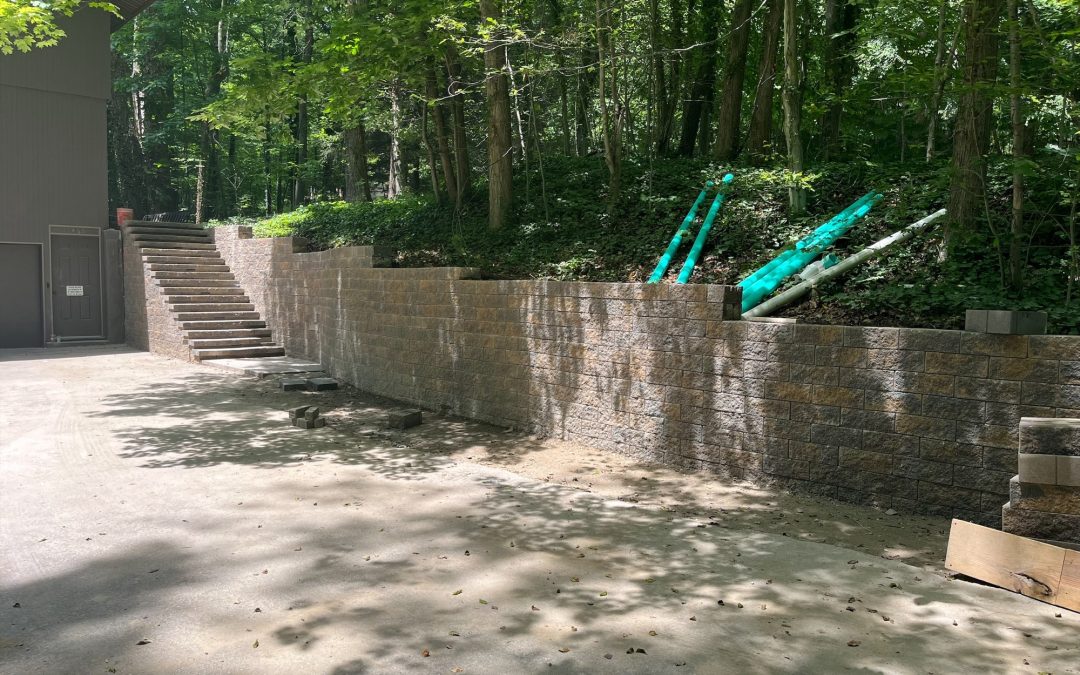

Ever seen how some properties look great even with steep slopes and soil erosion? It’s all thanks to retaining walls. At Kurtz Bros. Landscape Supply, we know how important these walls are for keeping your landscape looking good. With over 70 years of experience, we’ll help you pick the right retaining wall for your project.
Key Takeaways
- Retaining walls are key for controlling soil erosion and keeping slopes stable.
- There are many types of retaining walls, each with its own purpose, from gravity walls to reinforced soil solutions.
- The right retaining wall depends on your site’s conditions, the materials you choose, and your design needs.
- Getting your retaining wall installed right can improve how your property handles stormwater and looks better.
- Knowing what you need for your project is the first step to choosing the right retaining wall.
Understanding the Purpose of Retaining Walls
Retaining walls play a key role in various projects. They are beautifully engineered to keep our landscapes both pretty and useful. These walls stop soil from moving and help prevent erosion, making our landscapes stable and safe.
What Is a Retaining Wall?
A retaining wall is a structure built to hold back soil on slopes that are too steep. These walls can be vertical or almost vertical. They act as barriers to stop erosion and landslides. Their smart design is crucial in landscaping and construction, showing the power of structural engineering.
Why Are Retaining Walls Important for Landscape Design?
Retaining walls are essential in landscape design. They help create usable spaces and make outdoor areas look better. By terracing, they allow for beautiful gardens and living areas on slopes. These walls also add privacy and set the stage for plants, making outdoor spaces more pleasing to the eye.
The Role of Retaining Walls in Soil Reinforcement
Retaining walls help strengthen soil by making it more resistant to the pressure from the earth behind them. This is key for a stable environment, stopping soil from moving and causing erosion. Their role in managing soil is crucial for both homes and businesses.
Different Types of Retaining Walls
Exploring retaining walls shows us many types for different needs and sites. Each type has its own benefits and designs. This lets us pick the best one for our property.
Gravity Retaining Walls: Simplicity and Effectiveness
Gravity walls use their weight to fight soil and water pressure. Made of solid materials like concrete or stone, they’re simple and effective. They’re great for gardens where a strong but easy design is needed.
Cantilever Retaining Walls: Space-Efficient Design
Cantilever walls save space by using leverage for stability. They’re usually made of reinforced concrete with a vertical stem and a horizontal base. This design lets us build tall walls with less material. It’s a top choice for both homes and businesses.
Embedded Retaining Walls: Deep Excavation Solutions
For deep digs, embedded retaining walls are the answer. They go below ground to add extra support against soil pressure. Made from steel sheets, concrete, or wood, they’re perfect for cities where space is tight and deep cuts are needed.
Reinforced Soil Retaining Walls: Mechanics of Stability
Reinforced soil walls use geosynthetic materials for more stability and strength. By mixing soil with these materials, we reduce the risk of failure from soil movement. This wall type is great for projects needing both looks and stability.
When to Choose Each Type of Retaining Wall
Choosing the right retaining wall type is crucial. We must consider site conditions deeply. Factors like soil type, slope steepness, and water drainage patterns help us pick the best wall. These elements affect the wall’s stability and how well it controls erosion.
Evaluating Site Conditions for Optimal Retaining Wall Selection
Before building a retaining wall, we must check the site’s conditions. This means looking at:
- Soil type, to understand its load-bearing capacity
- Gradient of the slope, which affects wall height and design
- Water management systems that may require additional drainage solutions
These factors help us choose the right wall type. They ensure our landscaping goals are met.
Factors Affecting Choice: Height, Weight, and Material Options
Height and weight are key to a retaining wall’s strength. Materials like poured concrete, concrete blocks, or natural stone have their pros and cons. Our choice affects the wall’s look, cost, and how long it lasts. Knowing these helps us pick a wall that fits our needs and style.
Cost Considerations in Retaining Wall Construction
Budget is a big part of our decisions. Some walls, like gravity retaining walls, seem simpler and cheaper but take up more space. On the other hand, reinforced soil walls are more complex but can save money and time. Working with experts early can lead to better results that look good and are efficient.
Conclusion
Choosing the right retaining walls is key for both keeping our properties stable and making them look great. There are many types of retaining walls, each with its own benefits. This lets us pick the best ones for our landscaping goals.
Soil reinforcement and erosion control are also very important. Adding these to our designs makes our properties work better and look better too.
When we want to make our outdoor spaces beautiful and useful, we can count on experts like Kurtz Bros. Landscape Supply. They offer top-notch products that meet our needs and make us happy. With their help, we can turn our outdoor areas into places that are both lovely and strong.