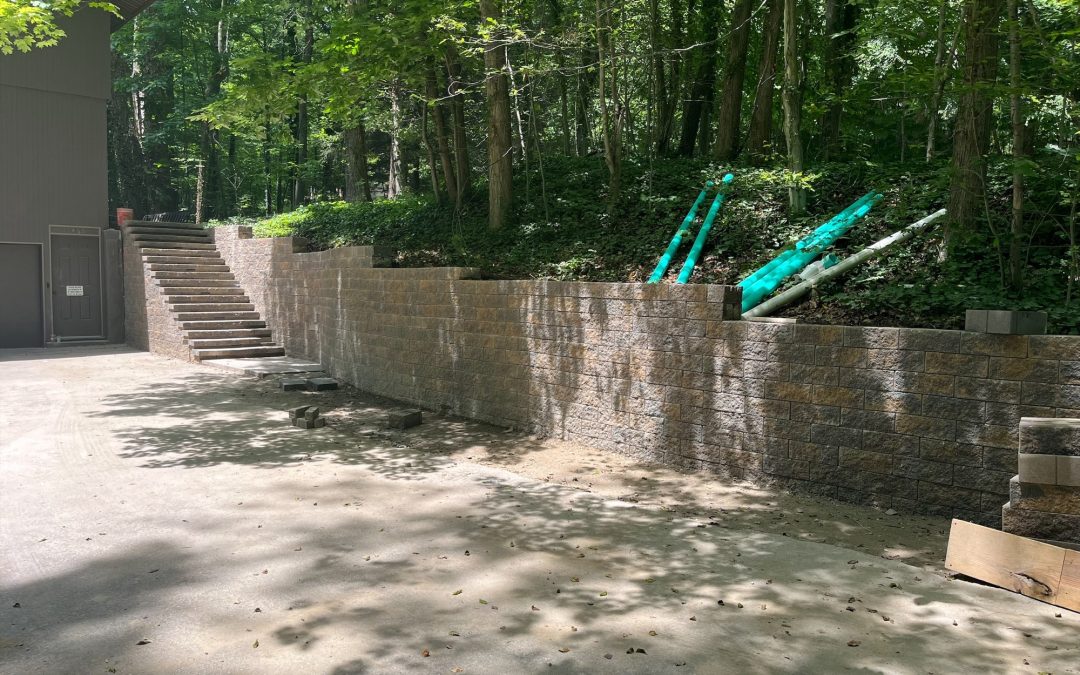

Have you ever thought about building your own retaining wall? Or wondered if getting professional help is better? In the world of landscape design, deciding between DIY and professional retaining walls is key. These walls are vital for controlling erosion, making slopes usable, and improving garden looks. Yet, the DIY appeal is strong, but building retaining walls can be complex and risky. Let’s explore both options to see what’s best for us.
Key Takeaways
- Understanding the crucial role of retaining walls in landscape design.
- The benefits and drawbacks of DIY retaining wall installation.
- Reasons to consider professional installation for retaining walls.
- The importance of structural safety and comprehensive design.
- Evaluation of erosion control techniques with different wall types.
- Insights on hardscaping and its impact on property value.
Understanding the Importance of Retaining Walls
Retaining walls are key in landscape design, offering both looks and function. They help hold back soil and manage slopes, changing our outdoor areas for the better. Knowing their benefits and types shows why they’re crucial for managing our landscapes well.
Benefits of Retaining Walls
Retaining walls have many advantages. They:
- Stop soil erosion, which is crucial for sloped properties.
- Manage water runoff with smart drainage solutions.
- Create spaces like gardens or patios where land was hard to use.
- Give more privacy and make our properties look better.
These walls can change how we use our land, making the most of our landscape.
Types of Retaining Walls
There are many types of retaining walls for different needs and landscape designs. Some common ones are:
- Gravity Walls: Use their weight to hold back soil.
- Cantilever Walls: Work by using leverage and are often made of reinforced concrete.
- Anchored Walls: Hold heavy loads with cables anchored in the ground.
- Segmental Walls: Use interlocking concrete blocks for design flexibility.
Knowing these types helps us pick the right wall for our landscape’s needs and design.
Pros and Cons of DIY Retaining Walls
Starting a DIY retaining wall project can be thrilling. We feel proud when we finish an outdoor feature that makes our property look better. But, we also face some challenges when we choose to do it ourselves.
Advantages of DIY Installation
There are many benefits to doing it ourselves. These include:
- Cost Savings: We cut down on labor costs, making our hardscaping projects cheaper.
- Creative Control: We get to make every part of the installation match our style.
- Skill Development: This project helps us improve our masonry skills by doing it ourselves.
Challenges of DIY Installation
Even with the good points, there are some issues to consider. Key problems might be:
- Technical Expertise: It’s important to know the right techniques for a stable wall.
- Time Commitment: Doing it ourselves can take a lot of time, especially for beginners.
- Compliance with Regulations: Following local building codes can be hard.
Benefits of Professional Installation of Retaining Walls
Choosing professional installation for our retaining walls is key for their durability and safety. By hiring experts, we get their deep knowledge in structural engineering. This ensures the walls last long and solve site-specific problems well.
Expertise in Structural Engineering
Professional installers have the skills needed in structural engineering. They can design walls that fit our property perfectly. They know how to handle the weight and pressure on the wall, making sure it doesn’t shift or collapse.
Comprehensive Design and Safety
Professionals also focus on drainage and landscape design. Good drainage stops water from building up and weakening the wall. With a full design, experts make sure the walls look good and fit well with our landscape, improving our property’s look.
Conclusion
Choosing between DIY and professional installation for our retaining walls is crucial. We must think about our budget, landscape needs, and skill levels. Doing it ourselves can feel rewarding and save money. But, we should remember the risks and challenges that might happen during the project.
Choosing professional installation means our retaining walls will look great and meet safety standards. Experts bring skills and experience that make our walls last longer and work better. This choice can make our landscape look better.
Both DIY and professional installation have their own benefits. Knowing the pros and cons helps us decide what’s best for our landscape. With careful planning, we can make retaining walls that are both useful and add beauty to our outdoor areas.