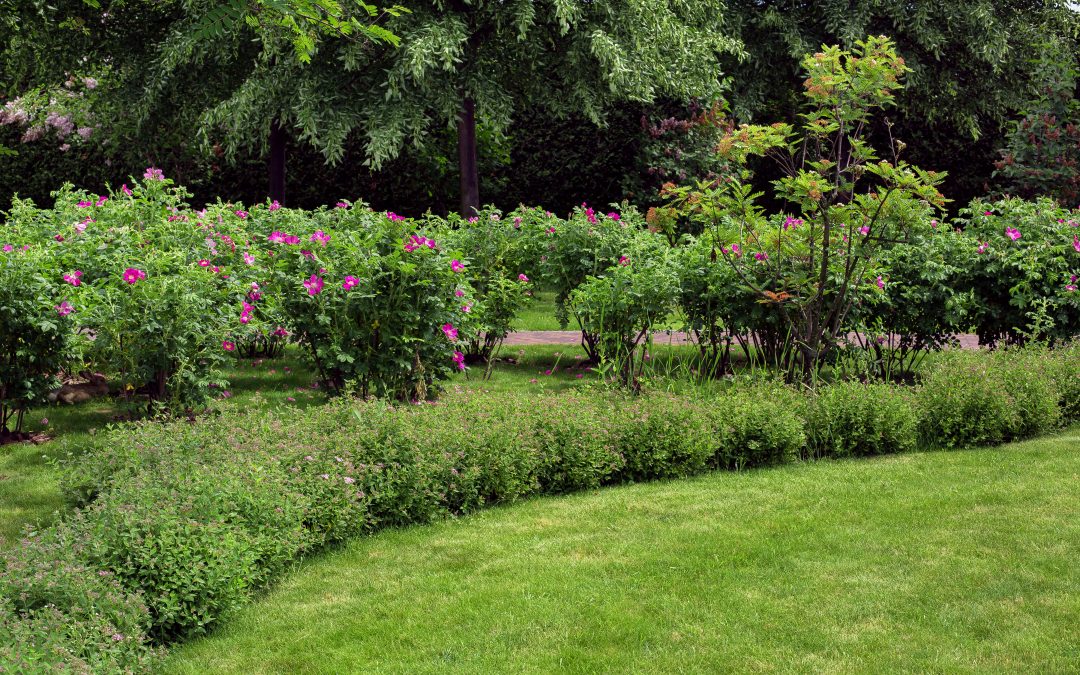
Few things in life are quite as lovely as a freshly manicured lawn surrounded by a verdant garden.
But that cultivation doesn’t occur naturally. Well, it does, but in a controlled environment, vegetation often needs a little extra help.
If you want your grass to grow thick, flowers to bloom, and trees to spring up tall, you must provide the nutrients they depend upon to flourish.
In other words, they need fertilizer.
What’s Fertilizer?
Fertilizer is a natural or chemical substance that’s added to soil to make it more fertile.
Just like we may take vitamins to supplement our diet, plants sometimes require fertilizer to supplement their growth. If a plant is malnourished or is grown in an unsuitable environment, it may require additional nutrients to thrive.
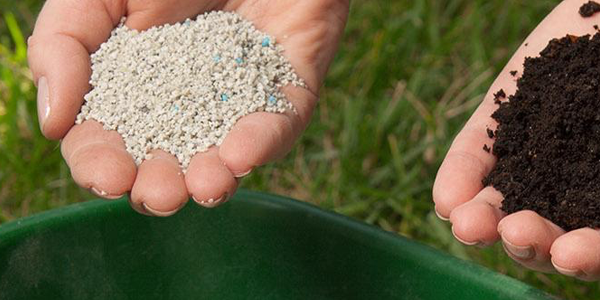
What’s In Fertilizer? The Three Macronutrients
Every growing plant depends on 17 essential elements to reach its full potential. Three elements—carbon, hydrogen, and oxygen—are obtained from air and water. The remaining 14 are absorbed by plants via the soil. Of those, three, in particular, are essential for plant growth:
1. Nitrogen – The most important of the primary nutrients, nitrogen is responsible for plants’ coloring and impacts the growth of leaves and stems. Most all-purpose fertilizers have high nitrogen contents.
2. Phosphorus – Phosphorus impacts the development of roots, flowers, and seeds. Also known as a bloom booster, it influences a plant’s ability to store and use energy, particularly in regard to photosynthesis.
3. Potassium – Potassium strengthens plants, helping them fight off disease and protect them from the elements.
Fertilizer Ratios
Practically every fertilizer will contain a specific combination of these three elements. The exact ratios will vary depending on your desired outcomes.
On a fertilizer’s label, you’ll see three numbers, such as (10-10-10). Those numbers represent the percentage of nitrogen, phosphorus, and potassium contained in the package. These percentages can then be reduced to ratios. For instance, a 10-10-10 would be a 1-1-1.
Common ratios include:
- General-purpose – (1-1-1)
- Trees, lawns, and leafy veggies – (2-1-1)
- Fruits, vegetables, seeds, and flowers – (1-2-1)
- Stressed lawns – (3-1-2)
- New lawns – (1-2-2)
When to Apply Fertilizer?
So, when is the best time to start fertilizing your plants?
The answer depends on the plant and your intentions. Various factors will impact a plant’s fertilizer absorption, including:
- Soil type
- pH levels
- Moisture
- Drainage
- Temperature
Most plants will benefit from a slow-acting fertilizer in the early spring. Doing so can supercharge new growth, especially for flowering plants.
Fertilizing Your Lawn
Let’s use your lawn as an example.
If you have warm-season grass like St. Augustine, Zoysia, Buffalo grass, or Bermuda grass, it’s best to begin fertilization in the spring. If you have cool-season grass, you may not need to fertilize until late spring, if at all.
Ideally, the ground temperature should be approximately 50 to 60 degrees Fahrenheit. Once that’s the case, you can take the following steps:
- Water the lawn in the days leading up to fertilization.
- Purchase a high-nitrogen all-purpose fertilizer.
- Spread the fertilizer evenly around the perimeter using a drop spreader or cyclone spreader.
- Fill in the middle by going back and forth in straight lines.
- Repeat the process once every two months.
Kurtz Bros—For All Your Fertilizing Needs
If you want your greenery to grow strong and healthy, you’ll need to fertilize your plants. Providing the proper fertilizer mixture at the optimal time is necessary to cultivate a thriving lawn and garden.
But how do you know when to buy and what to buy?
At Kurtz Bros, we offer several high-quality fertilizers. Whether you need an all-purpose fertilizer, pre-emergent, all-purpose greener, or a winterizer—our products can help beautify your yard.
Visit our store to speak with our gardening experts about growing your plants the right way.