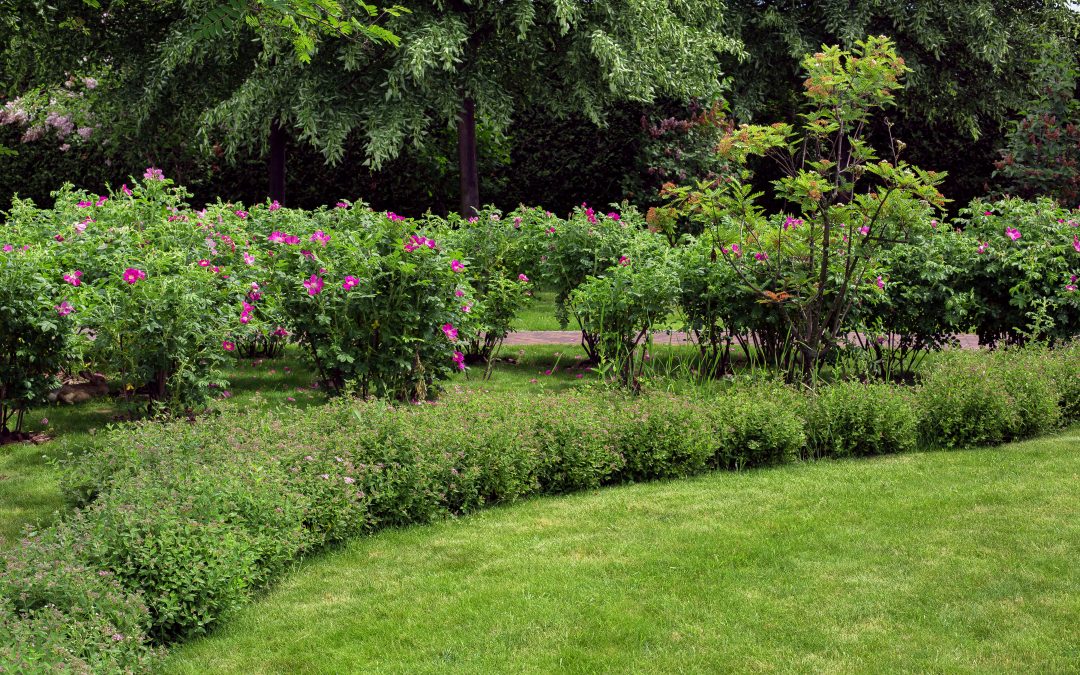

Spring is a great time to give your lawn the extra care it needs to be gorgeous during the warm-weather months. One crucial step in the spring law care process is aeration, which is basically loosening the compacted earth so your grass’s roots can actually breathe and thrive. Find out how to aerate your lawn and which tools can do the job.
Line Markers
Before you aerate, make sure you get some small flags and mark any irrigation lines, septic lines, sprinkler heads, and utility lines. You don’t want to hit one of these with a sharp hollow tiner or a motorized aerator!
Tools for Aeration
The aeration process can be simple or complex, depending on how much muscle you’re willing to put into the job and how large your lawn is. Here are some of the available tools and options.
- Fork: A large pitchfork, like the kind used for handling manure or hay, is the most basic aeration instrument. Shove the tines of the fork deeply into the soil, about 3-4 inches down. Move the fork back and forth a bit, then pull it up again and move it about 4 inches over to a new spot. Repeat the process again, and again, until you’ve covered your entire lawn.
- Hollow Tiner: The hollow tiner functions exactly like the fork and requires similar exertion. The difference is that its tines are hollow, so it draws out slim cores of soil as it works. That extra soil serves as a nice top dressing for your spring lawn.
- Spiked Boots: You can purchase special spiked soles that will aerate your lawn as you walk. The spikes are typically about 3 inches long, and they require less effort from your arms and hands than a fork does. You’ll need to ensure that you walk over every square foot of your lawn with these spiked soles. Just be careful not to step on anything that isn’t turf.
- Automated Aerator: For large lawns or backyards, an automated or motorized aerator is the way to go. You can rent one, or hire a professional with the right equipment to do the job for you. Aerators are large and heavy, so you’ll need a full-size truck to carry the equipment and at least one help to unload it.
Post-Aeration Maintenance
Aeration will leave bits of soil all over your lawn. Leave these in place as a top dressing; inside them are microorganisms that can help reduce lawn thatch. The next time you mow, the mower will loosen them and help them sift back down to ground level. You can also rake lightly to break up any large clumps of earth.
Fertilization and Re-Seeding
Right after aerating, add your spring fertilizer or compost, and sprinkle new grass seed on any bare patches. The newly punched aeration holes will let those materials sink deeper into the soil so they can have the best effect. Be sure to give your lawn extra water right after aeration, fertilization, and reseeding. If you have questions, need supplies, or want help from the experts, contact Kurtz Bros.,