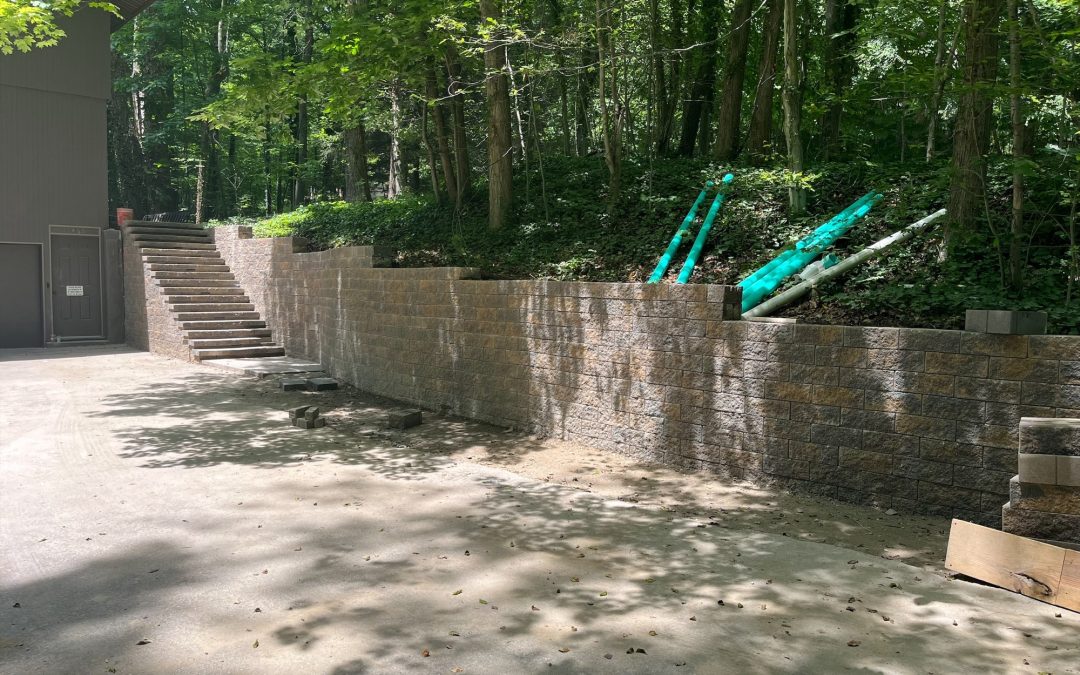

Are you thinking about making your yard look better and keeping it safe from erosion? Think about adding a retaining wall. This feature is often missed but it has many benefits. It can stop sinkholes and make your outdoor area better. Let’s see how a retaining wall can change your yard for the better.
Retaining walls are not just for looks; they’re key for hardscaping and stopping erosion. They keep the soil stable and manage runoff, protecting your yard’s foundation from weather damage. Plus, they make your property look better and increase its value. So, if you want to improve your outdoor space or fight erosion, a retaining wall is a smart choice.
Key Takeaways:
- Retaining walls prevent erosion and protect against damage from rain, wind, and water.
- They redirect water during storms, stopping floods and foundation cracks.
- Retaining walls stop sinkholes by spreading out water and preventing pooling.
- They give structural support, keeping foundations stable and safe from unstable soil.
- Retaining walls make land usable by creating flat areas for plants and activities.
Factors to Consider when Building a Retaining Wall
Building a retaining wall requires careful thought. Important factors affect its success and lifespan. We’ll cover key points to guide your decisions during construction.
1. Retaining Wall Cost
The cost of building a retaining wall varies. It depends on the wall’s size, location, and material. Costs range from $3,565 to $9,645 or $40 to $345 per linear foot. Set a budget and plan for extra costs.
2. Strongest Material for Retaining Wall
Choosing the right material is key for a strong wall. Poured concrete is the top choice for its strength and stability. It can handle the pressure from the soil behind it.
3. Saving Money on Retaining Wall
To save money, consider interlocking concrete blocks. They’re cheaper than traditional materials and still look great. These blocks come in different shapes and sizes, making your design flexible and affordable.
4. Permit for Retaining Wall
Before starting, check if you need a permit. The wall’s height and location determine this. Getting the right permits avoids legal problems later.
5. Hiring Professionals
DIY can work for small, simple walls. But for big or complex walls, get professionals. They ensure your wall is installed right and lasts long. They know how to tackle tough terrains and drainage issues, offering expert advice.
Keep these points in mind to make smart choices. They’ll help you save money and get a strong, good-looking retaining wall for your yard or property.
Factors to Consider when Designing a Retaining Wall
Designing a retaining wall involves several key factors. A custom retaining wall design lets you match it to your style and landscape. This way, it becomes a beautiful part of your outdoor area.
Retaining walls need little upkeep because they’re built to last. They don’t require as much care as other landscaping features. This means you can enjoy your yard more without the hassle.
These walls also protect other structures from damage. They stop soil erosion, water damage, and prevent collapses. By placing them carefully, you keep your property safe and your outdoor features in good shape.
Lastly, a well-designed retaining wall can boost your property’s value. It makes your home look better and provides useful benefits. This can attract buyers and increase your property’s worth.