
Ever thought about how a retaining wall could change your landscape and property stability? At Kurtz Bros. Landscape Supply, we know that picking the right retaining walls is key for homeowners wanting to improve their outdoor areas. With over 70 years of experience, we’re here to guide you in making smart choices for your landscape construction and soil stabilization.
Key Takeaways
- Retaining walls make your landscape look better and work better.
- Knowing the different types of retaining walls is important for planning.
- Soil stabilization is crucial for the walls to last longer.
- Good drainage systems help avoid structural problems.
- Planning your budget well means your project will look great and last.
Understanding Retaining Walls and Their Importance
Homeowners can greatly benefit from knowing about retaining walls and their role. These walls help manage soil and create beautiful terraced landscapes on slopes. They are both useful and add beauty to our homes.
What Are Retaining Walls?
Retaining walls are structures built to hold back soil on slopes where erosion might happen. They can be made of concrete, stone, or timber.
Benefits of Retaining Walls for Homeowners
Retaining walls offer many advantages for homeowners. They help:
- Stop soil erosion and runoff during heavy rain.
- Create flat areas in sloped yards, making more space available.
- Improve drainage by controlling water flow.
- Boost property value with their attractive designs.
How Retaining Walls Enhance Landscape Construction
Retaining walls are crucial for improving landscape design. They let us make garden beds, seating areas, and paths on uneven ground. These walls can match various styles, from natural stone to modern concrete. They make the most of the land and turn outdoor spaces into places to relax and socialize.
Types of Retaining Walls Suitable for Homeowners
Choosing the right retaining wall for our landscaping is important. There are many options available, each with its own benefits. Let’s look at some popular types.
Gravity Walls
Gravity walls use their weight to stay in place. They’re made of heavy materials like concrete or stone. These walls are great for big hills and need little upkeep.
Cantilever Walls
Cantilever walls have a special design. They have a horizontal slab that extends from a vertical stem. This design helps them resist earth pressure well, using less material than gravity walls. They look good and fit well in our landscapes.
Concrete Block Retaining Walls
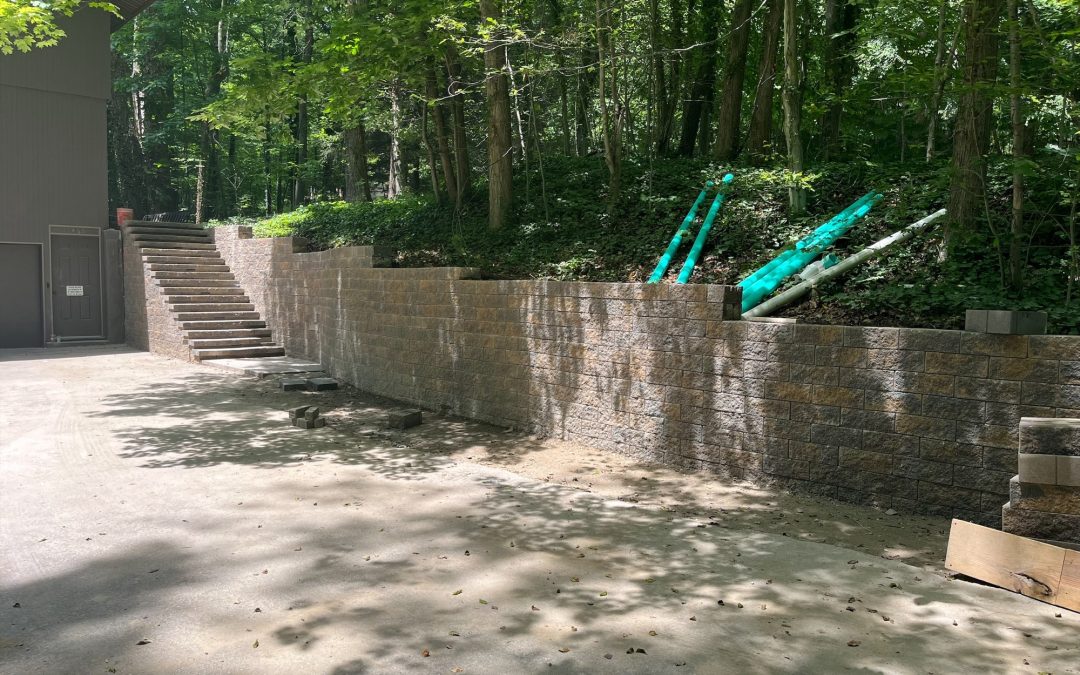
Concrete block walls are versatile and affordable. They’re made of blocks stacked together. You can change their height and design easily. These walls are strong for many uses, from small gardens to big projects.
Natural Stone Retaining Walls
Natural stone walls look rustic and elegant. They use stones from around here, giving our spaces a unique look. They’re tough, blend into the surroundings, and keep the soil in place well.
Key Factors to Consider in Retaining Wall Construction
Starting a retaining wall project means looking at several important factors. First, we focus on soil stabilization to stop landslides and make the wall last longer. We use caissons or grade beams for extra support. This creates a strong base that can handle different soil types.
Soil Stabilization Techniques
Using the right soil stabilization methods makes retaining walls work better. Here are some ways to do it:
- Adding stabilizing agents like lime or cement to the soil
- Employing mechanical stabilization through compaction
- Utilizing geogrids to distribute loads effectively
Drainage Systems: Why They Matter
Drainage systems are crucial for retaining walls. Without them, water can build up behind the wall, causing pressure that can make the wall fail. To avoid this, we should add:
- Weep holes to let water out
- Drainage pipes to move excess water away
- Gravel backfill for better drainage
Costs and Budgeting for Your Project
When planning a retaining wall, knowing the costs and budgeting well is key. Costs depend on:
- The materials and how it’s built
- The wall’s size and height
- Soil stabilization and drainage systems needed
Understanding these factors helps us plan our budget better. This ensures our project is a success.
Conclusion
Retaining walls are key to making our outdoor areas safe and look great. They help prevent soil erosion and boost the beauty of our landscapes. This lets us express our style in creative ways.
We looked at different types of retaining walls, like gravity and cantilever walls. Each type has its own benefits for various projects. Knowing about soil stabilization, drainage, and costs helps us make smart choices that fit our budget and goals.
Choosing a good retaining wall can make our homes look and work better. As we work on improving our landscapes, let’s pick options that bring us joy and satisfaction for years to come.